Carbide
Wear Rod |
|
 |
Carbide
Wear Rod |
|
|
|
|
|
|||||||||||||||||||
|
Typical Carbide Wear Rod Wear Patterns
Wear pads do not prevent
wear on the turning carbide, |
|||||||||||||||||||
|
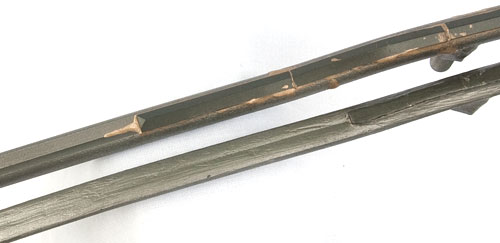
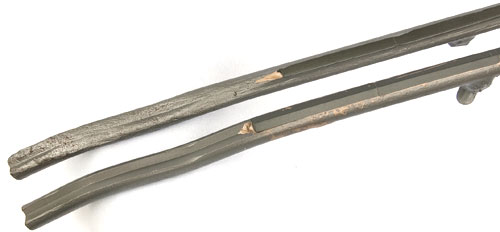
As you can see, the front and back wear pads, and even the turning carbide, did not prevent the host bar from wearing away. This leads to diminished handling and ski damage. The ski protection and turning ability of these wear rods were long gone. They demonstrate that these snowmobilers were not getting maximum function out of the turning carbide. |
|||||||||||||||||||
|
|
|||||||||||||||||||
|
Seven wear pads did
not keep the 2 inches of turning carbide from dulling. |
|||||||||||||||||||
| These Ski-doo carbides are good rods for driving on blacktop because at least every other inch is carbide (9" total). This snowmobiler threw away 15" (out of 18") of expensive carbide. And, the excessive wear in the front of the host bar severely damaged his ski... costing him even more money. | |||||||||||||||||||
|
|
|||||||||||||||||||
|
|||||||||||||||||||
|
|
|||||||||||||||||||
|
This Woody's carbide is a perfect example of the futility of wear pads and the resistance caused by them. |
|||||||||||||||||||
|
|
|||||||||||||||||||
|
|||||||||||||||||||
|
|
|||||||||||||||||||
|
|
|||||||||||||||||||
|
|||||||||||||||||||
|
|
|||||||||||||||||||
| Qualipieces – Cobra 4" | |||||||||||||||||||
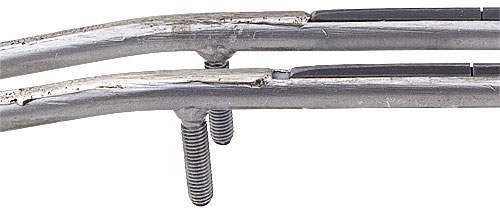
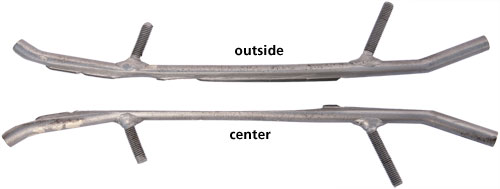
Qualipieces – Cobra 8" Black dots (toward front) indicate the start of the carbide. |
|||||||||||||||||||
Used Saber carbide From Ski Doo Flex ski. Note the heavy wear to the front.
|
|
||||||||||||||||||
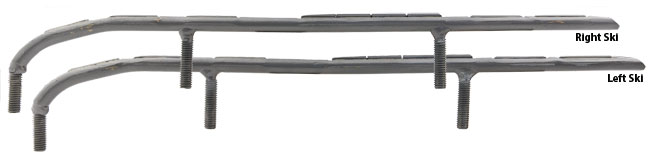
Used Pilot Rods Left ski rods. Note the heavy wear to the front. |
|||||||||||||||||||
Same sled right side ski. Note the heavy wear to the front. |
|
||||||||||||||||||
| Ski-Doo Extreme Rod Note the heavy wear to the front. |
|
||||||||||||||||||
| Woody's – Yamaha Slim Jims Note the heavy wear to the front of the turning carbide. There are only 500 miles on these rods. Ridden in the UP of MI (Gaylord area) with good snow conditions. ('08-'09 season) |
|||||||||||||||||||
| Slim Jims on Polaris 1,767 miles ridden in N&S WIS and the UP of MI (Gaylord area) with good snow conditions. ('08-'09 season) |
|
||||||||||||||||||
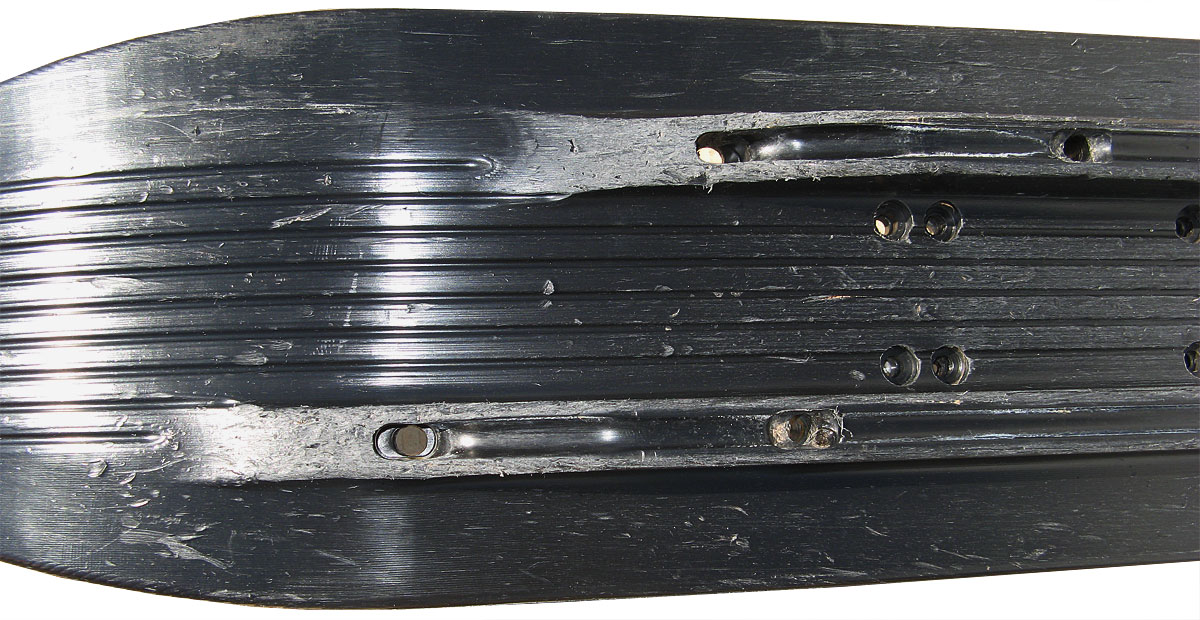
| Used Simmons Gen-3 rods 350 miles. Note the heavy wear to the front. |
 Click on image for larger view |
||||||||||||||||||
| Used USI Project-X Ski rod Note the heavy wear to the front.
|
|||||||||||||||||||
 The more carbide on
the wear rod, the more carbide you throw away.
The more carbide on
the wear rod, the more carbide you throw away.
| Kalamazoo Engineering's 18" of carbide was not enough in the 1970's. |
|
Flat topped |
|
The bar has worn from 7/16" to 1/4" |
|
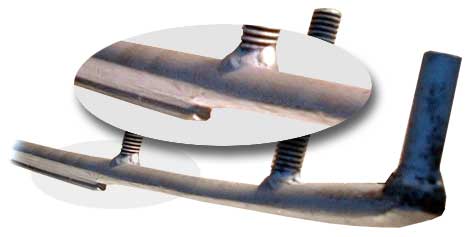
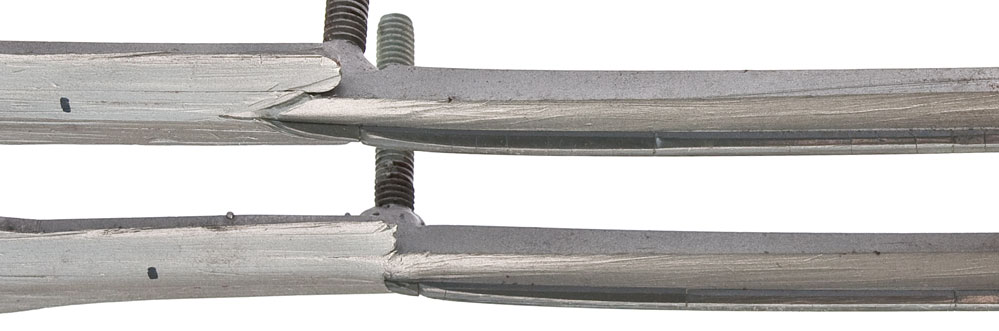
See how the host bar material is eroding around the carbide? |
John
Deere's 1981 22-5/8" of carbide - $216.00 per pair - was |
|
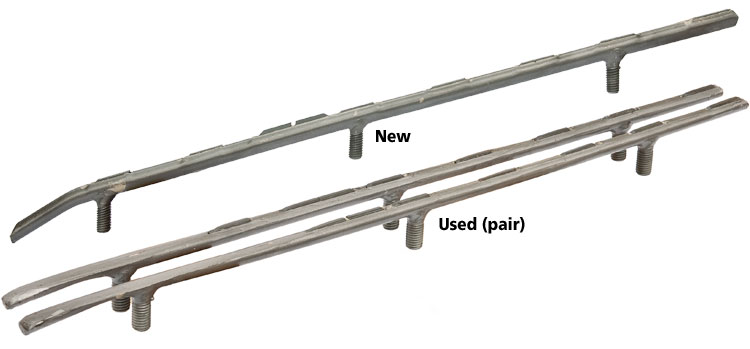
New carbide |
Used
carbide. This rod is off the right side ski - non-roadside. The left was sent to the dump along with the destroyed ski. |
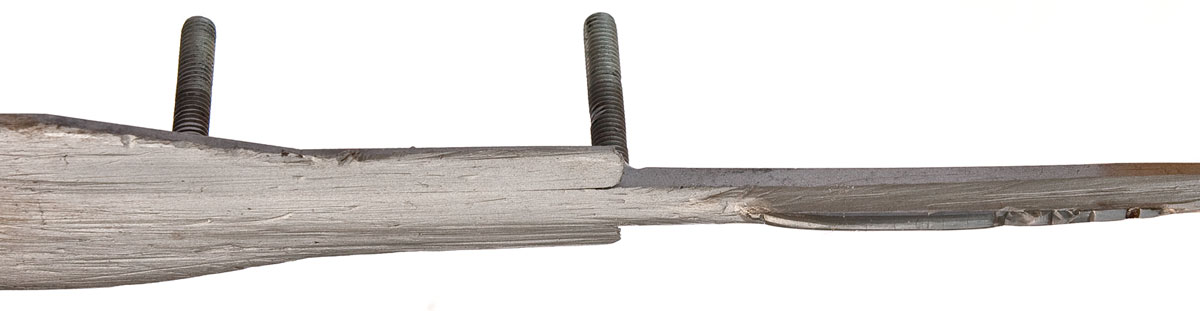
Note how the host bar material is eroding undercutting the carbide the full length. |
New & Used Rods Side by Side |
|
The unavoidable truth about
carbide... it only stays in as long as |
Back End |
|
Note the loss of host bar material, making the ski vulnerable. |
|
The wear pattern proves that carbide is not relevant to the life of the wear rod on a snowmobile trail. Bare pavement, yes, because then only the carbide makes any contract. |
These photos
PROVE that a wear rod lasts
only as long as it's weakest link.
Woody's model history
|
Woody's host bar channel history
|
Woody's wear pad history
Woody's turning carbide history
|
Woody's advertising history
Dollar per mile, Bergstrom Skegs are the best value on the market...Period! |
Home |
Main Prove
It Page | Site
Map
Copyright © 1999-2016 Bergstrom Skegs, Inc.
All
rights reserved.






.jpg)
-1.jpg)
-2.jpg)
.jpg)
.jpg)